
Armillaria Root Rot in Indiana: What Bloomington Homeowners Should Know
Armillaria root rot in Indiana is turning up more often this year. Purdue’s Plant and Pest Diagnostic Lab has been confirming it at a higher rate, especially on arborvitae. That matters for Bloomington and Ellettsville homeowners, because arborvitae privacy screens are planted in yards all over Monroe County. Since this disease works underground, it is usually well advanced before anyone notices. Here is what to look for and how to lower the risk in your landscape.
What Causes Armillaria Root Rot in Indiana?
Armillaria root rot is caused by soil-dwelling fungi in the Armillaria group (some species have recently been renamed Desarmillaria, so you may see either name). These fungi are common in Indiana soils and can attack nearly any woody tree or shrub. Pines and larches tend to hold up better, but no woody plant is fully immune. Oaks are among the most frequently infected trees.
The fungus is most likely to cause problems on older plants and plants that are already stressed. Small plants can die quickly once infected, while mature trees may hang on for several years before a drought or other hard season pushes them over the edge.
4 Warning Signs to Watch For
Armillaria root rot in Indiana is easy to miss above ground. Evergreens like arborvitae may lose color, drop individual branches, ooze resin near the base, and gradually look thinner and weaker. Below the soil line, the clues are more distinctive:
- Roots that look water-soaked, soft, or spongy
- Loose bark on larger roots with a white, fan-shaped layer of fungal growth underneath
- Black, string-like strands under the bark or in the soil, which is why this disease is also called shoestring root rot
- Clusters of honey-colored mushrooms near the base of hardwood trees in fall (these are often missing on evergreens)
Because the fungus causes a white rot in the wood, infected trees can become structurally weak over time.

Why Prevention Matters More Than Treatment
There is no spray or soil treatment that eliminates Armillaria. By the time most infections are spotted, the plant is already in serious decline. Because Armillaria root rot in Indiana is so closely tied to plant stress, everyday care is the best defense:
- Water deeply during dry summer stretches
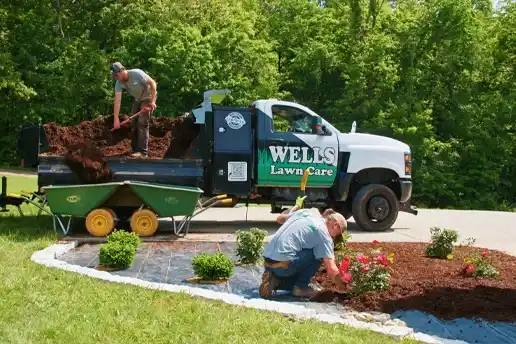
- Mulch the root zone with 2 to 3 inches of organic mulch, kept away from the trunk
- Avoid mower and trimmer wounds on trunks and exposed roots
- Protect roots from compaction and damage during construction or grading
What to Do If a Plant Dies
Remove dead or dying plants promptly so they do not attract wood-boring insects. Dig out the stump and as many infected roots as possible. The fungus can survive in old roots and soil for years, so replanting the same spot with another tree or shrub is risky. Ornamental grasses and perennials are often a better choice for that area.
Planning a New Privacy Screen?
If you are replacing a row of arborvitae, consider mixing two or three different evergreens and shrubs instead of planting a single species. A mixed screen is less likely to be wiped out by one disease, and it adds texture and seasonal interest to the yard.
How Wells Lawn Care Can Help
Wells Lawn Care & Landscaping helps homeowners across Bloomington, Ellettsville, and Monroe County keep trees and shrubs healthy with professional mulching, bed maintenance, and attention to drainage around plantings. If you have lost arborvitae or other shrubs, our plant and garden design team can recommend grasses, perennials, or less susceptible plants for affected areas, and our tree and shrub installation crew can handle the replanting.
Worried about Armillaria root rot in Indiana trees or shrubs on your property? If a large tree is declining, we recommend having an ISA Certified Arborist assess it for safety. For everything else in your landscape, request a quote and we will help you plan your next step.
