
Dogwood Trees in Indiana: How to Tell Them Apart and Choose the Right One
Dogwood trees in Indiana are some of the most recognizable plants in the landscape. Most people picture the flowering dogwood, with its white or pink spring blooms. But the Midwest is home to nine native dogwood species, and several of them make excellent landscape plants. Knowing how to tell them apart helps Bloomington-area homeowners choose the right dogwood for the right spot.
How to Recognize Dogwood Trees in Indiana
Dogwoods share a few traits that make them easier to spot:
- Leaves grow in opposite pairs, with one exception (pagoda dogwood)
- Leaf veins curve along the edge of the leaf toward the tip
- Fruit may be red, white, or blue depending on the species
- Fall color typically finishes in deep red
- Many species have red or green twigs that add color in winter
Because the leaves look so similar from species to species, telling shrub dogwoods apart can be tricky. A good field guide helps, and plant ID apps are worth double-checking. The Purdue Arboretum is another useful resource.
Flowering Dogwood
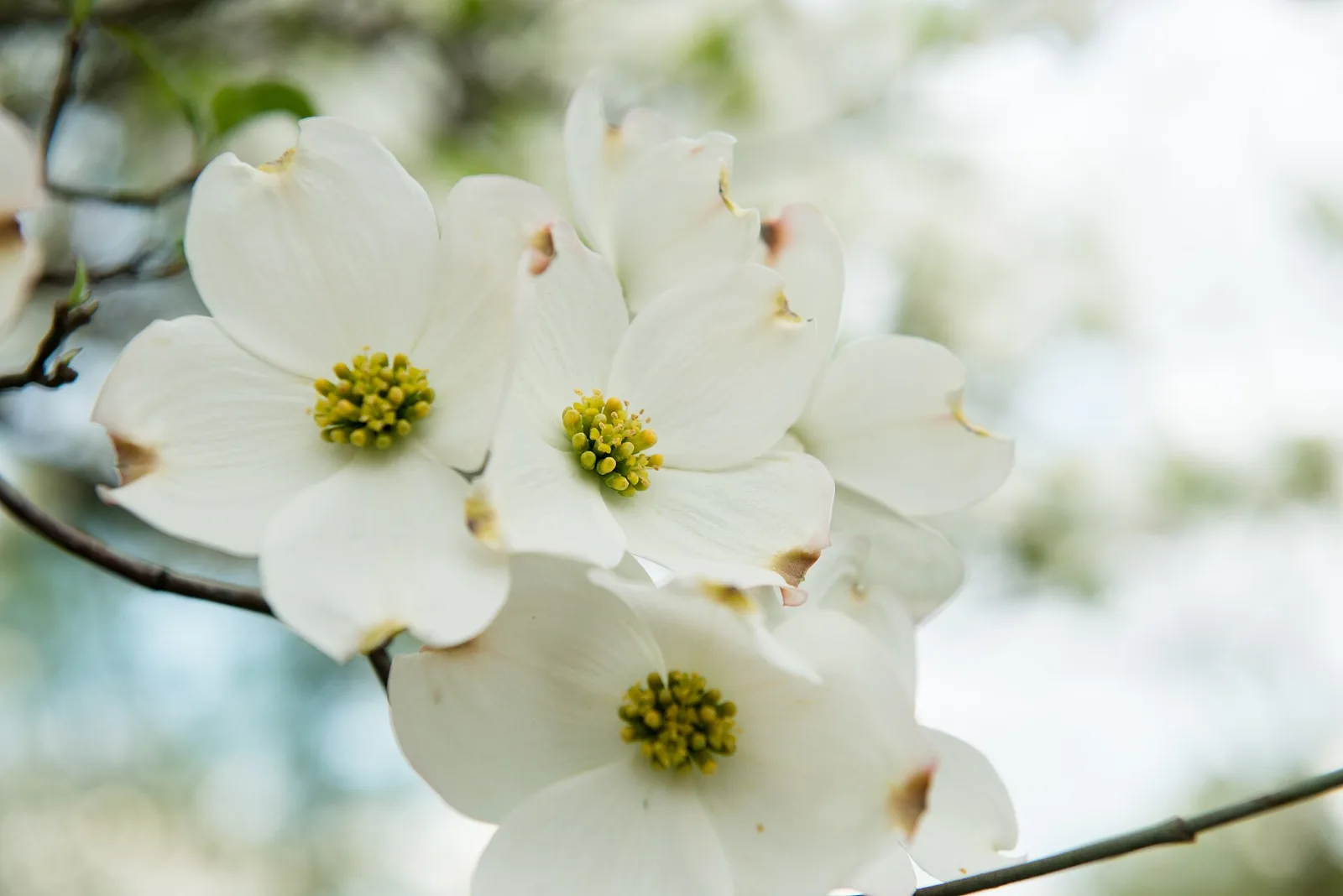
Flowering dogwood (Cornus florida) is the classic small tree known for its spring display. The showy white or pink parts are actually bracts, not petals. It handles some shade and naturally grows at the edges of woods in rich, well-drained soil. In home landscapes it often struggles in full, open sun, so a spot with afternoon shade usually works best.
Flowering dogwood typically stays under 30 to 40 feet tall, which makes it a good fit for smaller yards, patio corners, and the edge of a wooded lot. Pink and red-flowered varieties are widely available alongside the classic white.

Native Shrub Dogwoods Worth Knowing
Not all dogwood trees in Indiana are actually trees. Several native species grow as multi-stemmed shrubs:
- Pagoda dogwood: A small, tree-like shrub with layered branches that resemble a pagoda roof. It is the only native dogwood with alternate leaves, and its fall color is a rich burgundy.
- Red-osier (red twig) dogwood: The most widely available native shrub dogwood. Bright red young stems stand out in winter. It likes sun and moist sites and is easy to maintain.
- Silky dogwood: Reddish twigs and a natural preference for wet ground near ponds and streams. A good fit for low spots and rain gardens.
- Gray dogwood: Forms dense colonies that give birds and wildlife cover. It adapts to both wet and dry sites.
- Rough leaf dogwood: One of the larger shrub dogwoods, with hairy leaves. It needs room because it spreads by suckers.
- Swamp dogwood: Found mostly in poorly drained woods in southern Indiana.
Round-leaf dogwood and bunchberry are also native but are more common in northern Indiana and farther north.
Non-Native Dogwoods
Nurseries also sell non-native dogwoods such as kousa dogwood, Tatarian dogwood, and cornelian cherry. Kousa blooms several weeks after flowering dogwood and tolerates more sun.
Keeping Dogwoods Healthy
Flowering dogwood has shallow roots and does not like drought. Water during dry spells in the first few years, keep 2 to 3 inches of mulch over the root zone, and avoid hitting trunks with mowers or trimmers, since bark wounds invite disease and borers. Good air circulation also helps keep leaf diseases in check.
Adding Dogwoods to Your Bloomington Landscape
Choosing among dogwood trees in Indiana comes down to your site. A shaded corner might suit a flowering dogwood, a wet low spot could be perfect for silky or red-osier dogwood, and a natural area could benefit from gray dogwood. Wells Lawn Care & Landscaping helps homeowners in Bloomington, Ellettsville, and across Monroe County make those choices through our plant and garden design service, then handles the tree and shrub installation and ongoing care.
Thinking about adding a dogwood or a native planting? We can also pair dogwoods with native perennials and shrubs that bring in pollinators and birds. Request a quote to get started.
