
Emerald Ash Borer Indiana: 5 Critical Signs and What You Need to Know
Emerald ash borer Indiana infestations continue to impact landscapes across the state, even years after the initial outbreak. As Emerald Ash Borer Awareness Week approaches from May 17 through May 23, it is the perfect time to understand how this invasive pest affects ash trees and what you can do to protect your property.
This destructive insect has already devastated millions of ash trees throughout Indiana. While populations have declined in some areas, active infestations still exist and can quickly spread if not properly managed.
What Is Emerald Ash Borer?
Emerald ash borer is a wood-boring insect that attacks ash trees by feeding beneath the bark. Once inside the tree, larvae disrupt the flow of water and nutrients, eventually leading to decline and death.
This pest targets all species of ash trees and completes its entire life cycle within the tree, making early detection critical for successful treatment.
How to Identify Emerald Ash Borer in Indiana
Most homeowners first notice emerald ash borer through damage rather than the insect itself. Recognizing early signs can make the difference between saving and losing a tree.
- D-shaped exit holes in the bark
- S-shaped galleries beneath the bark
- Thinning or dying canopy
- Premature leaf drop
- Bark splitting or peeling
Adult beetles are metallic green and about half an inch long, but they are rarely seen compared to the visible damage they leave behind.
Life Cycle and Why Timing Matters
Emerald ash borer begins its life cycle in early summer when adults lay eggs in bark crevices. Once hatched, larvae tunnel beneath the bark and feed on the tree’s vascular system.
Larvae can remain inside the tree for one to two years before emerging as adults between late May and September, continuing the infestation cycle.
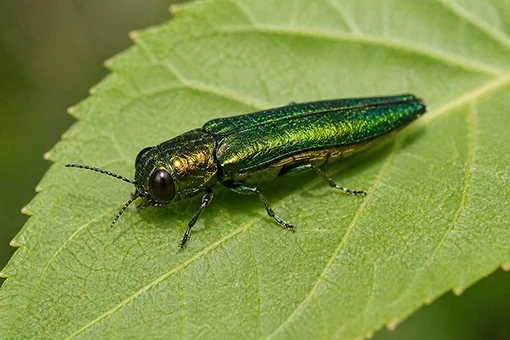

How Emerald Ash Borer Damages Trees
Damage from emerald ash borer is progressive and often goes unnoticed until it becomes severe. As larvae feed, they block the tree’s ability to transport nutrients, leading to visible decline.
In Indiana landscapes, trees that lose more than 30 percent of their canopy are often too far gone to save. However, early-stage infestations can still be treated effectively.
Common effects include:
- Canopy thinning and dieback
- Dead branches and limb loss
- Increased brittleness and safety hazards
- Complete tree failure if untreated
If you are noticing these signs, it may be time to consult a professional. Our tree and landscape services can help assess damage and recommend the best course of action.
Protecting Ash Trees in Indiana
While emerald ash borer is now a permanent part of Indiana’s ecosystem, proper monitoring and treatment can help preserve healthy trees. Early intervention is key to slowing damage and extending tree life.
Treatment options are most effective when applied before severe infestation occurs. Routine inspections and preventative care can make a significant difference in long-term tree health.
For additional guidance, visit the Purdue Emerald Ash Borer resource page for up-to-date research and management recommendations.
Why Awareness Matters
Emerald Ash Borer Awareness Week is a reminder that even though this pest has been around for years, it is still actively affecting trees across Indiana. Staying informed and taking action early can protect your landscape and prevent costly tree loss.
If you suspect an issue, professional evaluation can help determine whether your tree can be treated or needs removal for safety.
