
Japanese Beetle Grubs: Signs, Life Cycle & Lawn Damage
Learn the signs, life cycle, and treatment options from Wells Lawn Care.
Japanese Beetle Grubs Are Feeding in Your Lawn Right Now
If you’ve noticed brown, spongy patches spreading across your lawn this month, Japanese beetle grubs may already be at work beneath the surface. This invasive pest has been part of Indiana summers since the 1930s, and late summer is exactly when the damage — both above ground and below — hits hardest. Here’s what Wells Lawn Care wants every homeowner to know before it spreads further.
What Are Japanese Beetles?
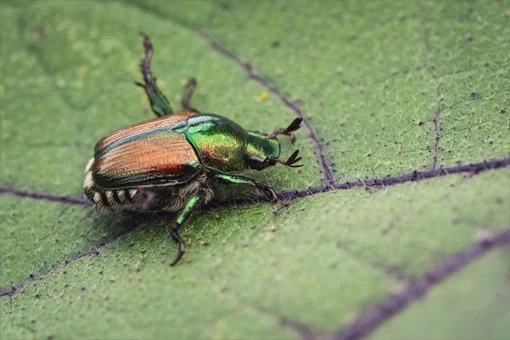
Japanese beetles are easy to identify once you know what to look for: a metallic green head and body, copper-colored wing covers, and small tufts of white hair along their sides. Adults are about the size of a dime and tend to show up in groups, clustering on the same plants until only tough leaf veins are left behind. The insect was introduced to the U.S. by accident in the early 1900s and has no natural predators here the way it does in its native Asia — a big reason it spreads through yards and landscapes so easily, and why the grub stage that follows can do so much quiet damage to turf.

The Two-Stage Threat: Adult Beetles and Japanese Beetle Grubs
Japanese beetles cause two very different kinds of damage depending on the stage of life they’re in, and knowing both is key to protecting your property.
Above Ground: Adult Beetles Feeding on Your Plants
Adult beetles emerge in early summer and feed heavily through June, July, and August on hundreds of different plants — trees, shrubs, garden vegetables, and flowers are all fair game. As they feed, they release a scent that draws in even more beetles to the same spot, which is why a few beetles can turn into a serious infestation within days. It’s also why we don’t recommend the beetle traps sold at hardware stores — they actually pull beetles in from surrounding yards, often making the problem on your property worse instead of better.
Below Ground: Japanese Beetle Grubs Feeding on Your Lawn’s Roots
While adults feed above ground, the next generation is doing damage underneath it. Female beetles lay eggs in the soil, and by late July those eggs hatch into grubs that spend the rest of the summer feeding on grass roots just a few inches below the surface. This root damage is what causes lawns to develop soft, brown patches that peel back like loose carpet — one of the clearest signs of Japanese beetle grubs at work. As temperatures cool in fall, the grubs burrow deeper to survive winter before emerging as adults the following summer, completing a single generation each year.
Timing Your Treatment Plan
Treating for Japanese beetles isn’t a one-time fix — it works best as a season-long plan built around where the insect is in its life cycle. Foliar treatments are most effective while adult beetles are actively feeding on plants, while grub control needs to happen while grubs are still young and close to the soil surface, typically in late summer. Wait too long in either direction, and the treatment window closes along with it.
Why Professional Japanese Beetle Grub Control Matters
Because this pest damages your landscape plants and your lawn’s root system at the same time, treating one without the other only solves half the problem. Our grub control team times every application to match exactly where beetles and grubs are in their life cycle, so you’re not guessing at products or application windows — and your lawn has the best possible shot at recovering before the damage sets in for good. For more background on how this pest develops, Purdue Extension’s guide to Japanese beetles is a great technical resource.
