
Winged Burning Bush: Invasive Shrub and 6 Native Alternatives
Winged burning bush has been a landscape favorite since the late 1800s, thanks to its brilliant red fall color. It is also invasive. Researchers have known since the 1970s that this shrub escapes from yards into natural areas, and Purdue experts now urge Indiana homeowners not to plant it. If you have a burning bush in your Bloomington landscape, here is what makes it a problem and which native shrubs can take its place.
In This Article
Why Winged Burning Bush Is Invasive
Winged burning bush (Euonymus alatus), also called winged euonymus or simply burning bush, tolerates a wide range of sites and soil conditions. It grows in full sun and also tolerates full shade under a forest canopy. Birds eat the fruits and spread the seeds from landscapes into neighboring woodlands, where the shrub forms dense undergrowth. A single plant can produce fertile seed, and stands also thicken by layering, which happens when a branch touches the soil and roots.
Purdue researchers warn that this threatens the native diversity and productivity of natural habitats in Indiana. High deer populations make the problem worse. Deer prefer to browse desirable native plants and avoid winged burning bush, which gives it an edge.
How to Identify Winged Burning Bush
- Twigs and branches have corky ridges, or "wings."
- Leaves grow in opposite pairs, about three-quarters of an inch to two inches long, tapering at each end.
- Fall color is a vibrant red in full sun and magenta or pink in shade.
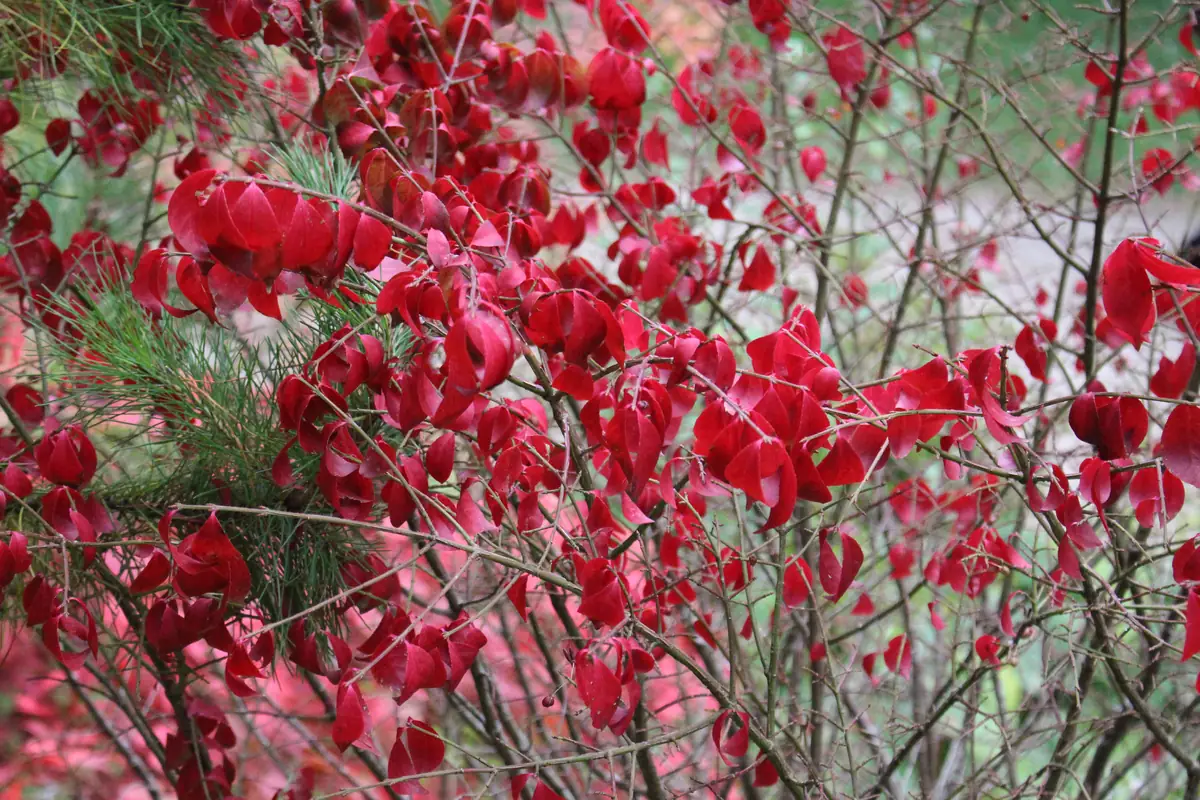

Native Euonymus Look-Alikes in Indiana
Indiana has three native euonymus species that can be confused with their invasive relative:
- Eastern burning bush, or wahoo (Euonymus atropurpureus): a large shrub that can grow to the size of a small tree. It is the most common of the three.
- Running euonymus (Euonymus obovatus): a perennial groundcover that only grows from about one foot to a few feet tall.
- Strawberry bush, or brook euonymus (Euonymus americanus): a small shrub found mostly in southern Indiana.
These natives belong in an Indiana landscape. If you are not sure which euonymus you have, our team can help you identify it before you decide what to keep. If your shrub is struggling with pests, our guide to euonymus scale in Indiana covers what to look for.
6 Native Shrubs to Plant Instead of Winged Burning Bush
Prevention is simple: do not plant winged burning bush. If you already have one, consider removing it and replacing it with a native alternative. Purdue suggests these:
- Wahoo: a native burning bush with a similar look.
- Chokeberry: known for fall color and berries.
- Common ninebark: a tough shrub with peeling bark.
- American cranberrybush viburnum: flowers in spring and red fruit later.
- Fragrant sumac: a native shrub with colorful fall leaves.
- Winterberry: red berries that last into winter and feed birds.
Research any replacement to make sure it fits your site, including its mature size and growing conditions. Our plant and garden design service helps Bloomington and Monroe County homeowners choose the right shrubs, and our tree and shrub installation crew handles removal and planting. For more ideas, see our post on native plants for wildlife or explore our landscaping design options.
Replacing a winged burning bush takes only a weekend, and the native shrubs you plant in its place will feed local birds and pollinators for years to come.
Source: Popular Landscape Shrub is Invasive by John Woodmansee, Purdue Landscape Report, which draws on the Purdue Extension publication "Invasive Plant Series: Winged Burning Bush" (available at the Purdue Education Store). Photos via the Magnific stock library.
